
Leadwork In Dartford
Is water getting in where your roof meets a wall?
Flashings, soakers, valleys, bay roofs and chimney aprons dressed in sheet lead and fixed properly
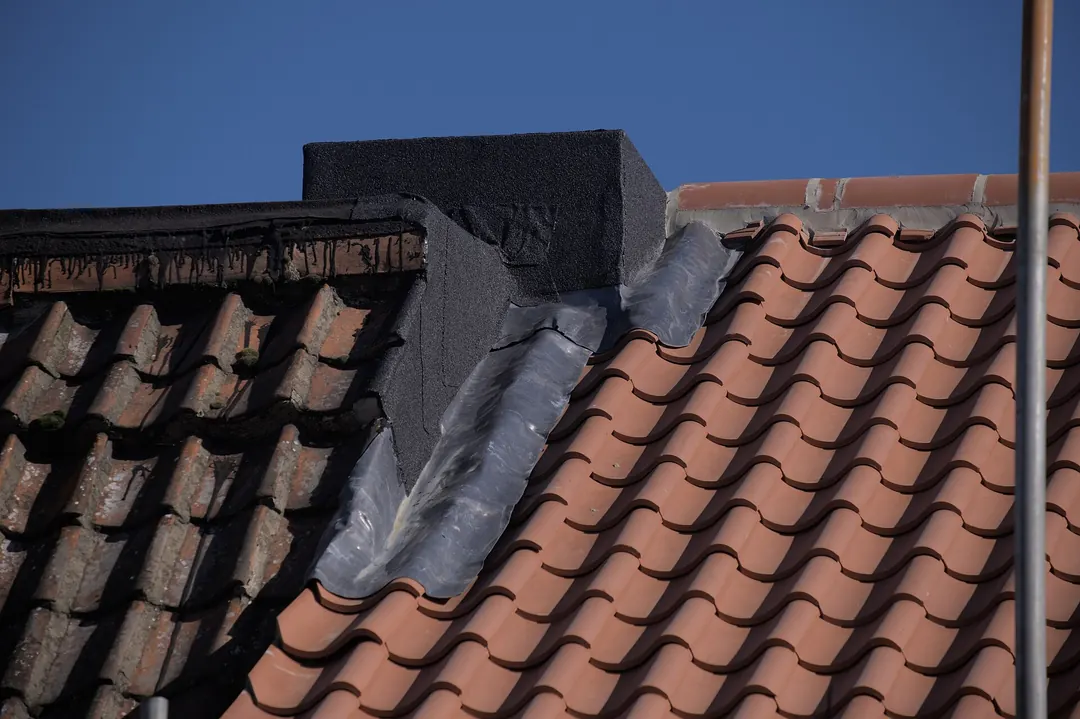
Leadwork in Dartford is mostly about joins. Most houses here are terraces and semis, so the roof meets something else all the time: the neighbour's wall, a back addition, a shared chimney, a bay. Every one of those joins should be sealed with lead. When it's been done with a smear of mortar or a tube of silicone instead, it fails, and the water runs down inside the wall where you won't see it for months. We cut, dress and fix lead the way the Lead Sheet Association's guidance sets out. The right code for the position. Pieces kept to sensible lengths. Each one wedged into the brick joint and pointed. It's slow, careful work, and on most roofs it's the cheapest part of a proper fix.
Ask About Your Leadwork
A roofer rings you back to arrange a visit.
Why proper lead still beats the shortcuts
Lead isn't the cheapest way to seal a join. It is the one we've seen last longest on Dartford roofs, as long as it's fitted the way the guidance says.
01
It moves with the house
Brick, timber and tile all shift a little through the seasons. Sheet lead is soft enough to follow that movement without splitting, which a hard mortar fillet can't do. That's why the fillets we find have usually cracked along their whole length, not in one spot.
02
Right thickness for each job
Soakers, step flashings and valley linings don't all want the same weight of lead. Thin lead in a valley wears through. Thick lead in a soaker won't dress tight to the tile. We pick the code to suit the position, not whatever's left on the roll.
03
Short pieces, fewer cracks
Lead expands and contracts every day the sun is on it. Run one piece too long and it tears itself at the fixings. Our lengths stay within the guidance, joined with laps or drips, so each piece has room to move.
04
Fixed into the brick
A flashing tucked into a raked-out mortar joint, wedged and repointed, stays put in a gale. One glued to the face of the wall with sealant usually peels within a few summers. You can tell the difference from the garden once you know what to look for.
05
No white streaks down the wall
Fresh lead sheds a white carbonate run-off for a while, and it marks tiles and brickwork below. A coat of patination oil once the lead is dressed stops that. Ten minutes of work saves you a stained front elevation.
06
Decades, not seasons
Well-laid lead flashings commonly last fifty years or more, often outliving the tiles around them. A silicone bead can be failing inside five. Over the life of a house, doing it once in lead is usually the cheaper route.
1,000+
Roofs repaired, renewed and rebuilt
10 yrs
Written guarantee on every re-roof
5★
The only rating anyone has left us
£0
For the survey and the written quote
Terraces, back additions and shared stacks
Only about one Dartford home in thirteen is detached. Everything else shares a wall with someone, and that decides where the leadwork sits. Look along almost any terrace and you'll spot it: the stepped flashing where a two-storey back addition meets the main wall, the apron at the foot of a stack two families share, the soakers where one roof steps down below the next. Each join is a weak point if it's been bodged. And because the wall is shared, water that gets in on your side can show up in next door's bedroom first.
The other Dartford pattern is the 1930s semi, which you'll find all round our own patch off Shepherds Lane and Princes Road. Plenty of those houses have a bay at the front, some fully leaded, some tiled with lead where the bay meets the wall. Ninety-odd years on, a lot have been patched with felt, cement or flashing tape. We strip those repairs back and lay lead properly. It isn't glamorous. It's the reason the bedroom wall above the bay stops going damp every October.
"When we trace a leak back to a flashing on a Dartford house, it's far more often a shortcut someone took than lead that has simply worn out."
How a leadwork job runs on a Dartford roof
- 1
Look at it from both sides
We check the join from the roof and from the loft or bedroom below. Damp patterns inside often show which way the water is travelling, and that tells us whether it's the flashing, the soakers underneath or the brickwork above.
- 2
A price in writing
You get a written quote naming the lead code, the length of flashing and how it'll be fixed. If the brick joints above need repointing or a cracked tile needs swapping, that's listed too, so nothing new appears on the invoice.
- 3
Getting up there safely
A low bay or back addition can often be done from a ladder and roof ladder. Chimney aprons and high abutments usually need a tower or scaffold. On a terrace, we'll talk to you about any access needed over next door's roof.
- 4
Strip out the old work
Old lead, cement fillets and sealant all come out. We rake the joint the new flashing will tuck into, then check the tiles and battens underneath and replace anything soft or broken before any lead goes back.
- 5
Cut, dress and fix
New lead is cut to length, dressed to the tile profile and turned into the joint. It's held with lead wedges and pointed in. Soakers go under each course, step flashings over them, with laps where the guidance calls for them.
- 6
Oil it and test it
Patination oil goes on to stop white staining. Where we can, we run a hose over the join and check inside before anyone climbs down. If something's wrong, now is the time to find out.
- 7
Show you the finished join
You get photos of the work, including the parts you can't see from the ground, and a note of what we found. Any scrap lead leaves with us. It doesn't get left in your front garden.
10
Years' cover on a new roof
1,000+
Roofing jobs finished
Paperwork in your hand on the last day. Not posted out "in due course".
What the 10 year guarantee on a re-roof actually covers
Re-roof a house in Dartford with us and you get 10 years of cover on the workmanship. It's a written document. It has your address on it, lists what was done, and is dated the day the roof is signed off. If water gets in because something was fitted wrong - a batten, a fixing, a lap, a flashing - a roofer comes back and puts it right. You don't pay for that.
Why are we happy to promise ten years? Because of how the roof goes on. Every tile or slate is mechanically fixed to BS 5534, the current British Standard. Ridges and hips are fixed too, not just sat in mortar. A breathable membrane goes down first. Where a roof meets a wall, a chimney or the house next door, it gets proper lead or a tested dry system. Shortcuts there are what make a guarantee expensive, so we don't take them.
Tiles, slates and membranes also carry the maker's own warranty. Those vary by product, and your paperwork tells you which ones apply. If a job is too unusual to guarantee in the normal way, you'll hear that at quote stage.
What to look for in a roofer for leadwork in Dartford
Ask what code of lead they'll use
A roofer who works with lead regularly will answer straight away: a lighter code for soakers, heavier for flashings, heavier again for valleys and gutters. If the answer is vague, or amounts to whatever is on the van, that tells you something. You don't need to know the codes yourself. You just need to hear that they do, and see it written on the quote. A good roofer will also mention how the pieces will be joined and how deep the flashing tucks into the wall.
Be wary of the doorstep offer
Kent's Trading Standards team lists bogus roof and gutter repairs among the usual doorstep scams, and a loose flashing is an easy thing to point at from the pavement. In March 2022, with storm damage still being patched across the county, Kent's community wardens told of an elderly man billed more than £3,000 for shoddy work on his roof. Their three-part advice is worth remembering: never assume, never believe, always confirm. A genuine roofer leaves you a written quote and is happy for you to get other prices.
Look for lead that's fixed, not glued
Next time you're in the garden, look up at the flashings along your street. Good ones sit tight to the tile, step neatly up the wall and disappear into the mortar joints. Bad ones are stuck to the brick face with a fat bead of black or grey sealant. Ask any roofer you're thinking of using for photos of lead they've fitted on roofs like yours. If all they can show you is sealant and flashing tape, keep looking.
Rolled lead against the alternatives
Four ways people seal the joins on a roof. We use the first by default and the second where theft or weight is a genuine worry. The other two we mostly take off.
| Comparison point | Rolled sheet lead | Lead substitute (polymer-based) | Mortar fillet | Silicone or flashing tape |
|---|---|---|---|---|
| Lifespan | Fifty years plus when fixed to the guidance | Varies by product, check the maker's figure | Tends to crack once the building moves | Often peels or hardens within a few years |
| Copes with movement | Yes, soft enough to dress and flex | Yes, most are flexible | No, rigid and brittle | Only until the adhesive ages |
| Theft risk | Has scrap value, can attract thieves | No scrap value | None | None |
| Look from the street | Traditional, dulls to soft grey | Lead-coloured, close from the ground | Visible cement band along the wall | Obvious bead or strip, often patchy |
| Listed homes and conservation areas | Usually expected | May not be accepted, ask first | Traditional on some old cottages, in lime | Not appropriate |
| Best for | Chimneys, valleys, bays and abutments | Exposed, easy-to-reach roofs | Like-for-like on some historic buildings | A short holding repair only |
Valleys, bay roofs and chimney aprons
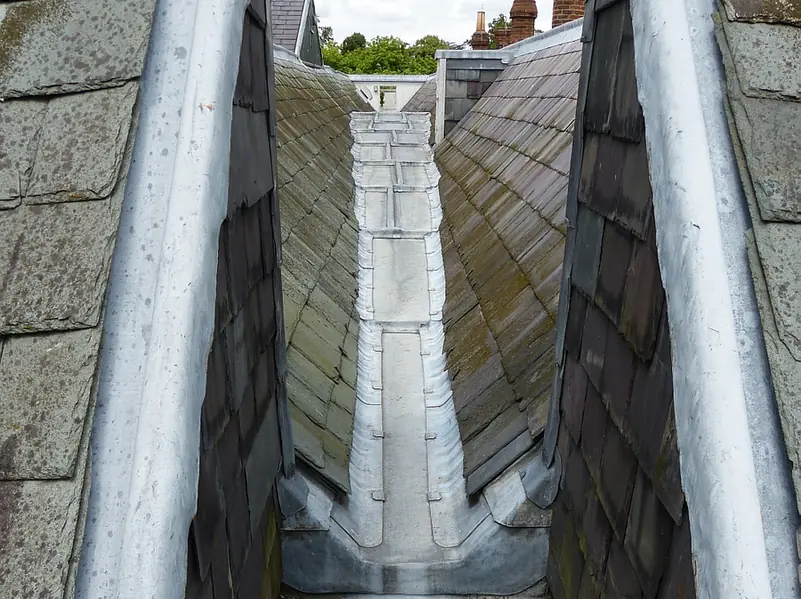
A lead valley is a channel, and on a terrace it can carry water off your roof and next door's at once. When old valley lead splits, it's usually because it was laid in long lengths with no drips, or because debris sat in it and held water. Relining one means lifting the tiles either side, fixing new boards and laying lead in sensible sections.
Bay roofs and porch canopies are the other common job. Some are fully leaded, some tiled with lead at the wall. Where your chimney apron is part of a bigger stack repair, our chimney page covers the brickwork and flaunching side.
Chimney repairs in Dartford
What leadwork costs in Dartford
New lead flashing round a chimney is typically £450 to £1,300, depending on the size of the stack and how we reach it. Relining a valley, including one shared with next door, usually runs £600 to £1,600. Short abutment flashings over a back addition or bay can come in lower. Scaffold is often the biggest variable, so it's priced as its own line.
Leadwork questions we get asked
Do I need planning permission to replace lead flashings in Dartford?
Not usually. Like-for-like repairs that don't change how the house looks are normally fine without planning permission. Things change if the house is listed or in a conservation area. In Dartford town that means the Town Centre conservation area, which is the town's sole conservation area, plus the Article 4 directions on 31-35 West Hill and on Hampden Place at 73-87 West Hill. Check with Dartford Borough Council before swapping lead for a substitute on any of those.
Why has my new lead gone white?
That's lead carbonate, a natural reaction when fresh lead meets rain. It washes off as a white streak and can mark the tiles and brickwork below. Patination oil applied straight after fitting stops it. If yours was fitted without it and the staining bothers you, the oil can still go on later, and the lead dulls to grey on its own in time.
Is lead theft a problem for houses?
It's mostly a risk for churches, schools and commercial buildings with large areas of lead. Houses aren't immune, though, especially low bay roofs and flat porches that are easy to reach. If you're worried, a polymer-based lead substitute has no scrap value. We'll talk through which parts of your roof are exposed and where real lead is worth keeping.
My neighbour's flashing is leaking into my house. What can I do?
On a terrace that happens a lot, because one stack or abutment can serve two roofs. Speak to your neighbour first; most are glad to know. We can survey from your side and tell you whose roof the fault is on. If the shared wall itself needs work, the Party Wall etc. Act 1996 can require formal notice to your neighbour, and the government's explanatory booklet explains how.
Can you just patch the crack in my lead?
Sometimes. A small split in a flashing can be welded or replaced as a short section, which costs less than redoing the run. If the lead has cracked because the pieces were too long or fixed too tightly, a patch will crack again right next to the repair. We'll tell you which it is and price both if it's close.
How long does a typical lead job take?
An apron and side flashings on a terrace stack is usually a day's work once the scaffold is up. A valley reline might take one or two days, depending on its length and how many tiles need lifting. We won't dress lead on a soaking roof in a downpour, but north Kent's low rainfall means we rarely lose many days to weather.
Related: Chimney repairs · Roof repairs · Re-roofing
Reviews from Dartford homeowners
Every review left for us so far has been five stars. We're adding them here as they come in.
Reviews only tell you so much anyway. When a roofer comes out to Dartford, ask to see photos of a recent job on a house like yours. A good roofer will have plenty and won't mind you asking.
Lead flashings and valleys fitted across these areas
Get the joins on your roof done right
Send us a photo or book a free survey. We'll tell you whether the lead needs replacing or just refixing, and give you a written price either way.