
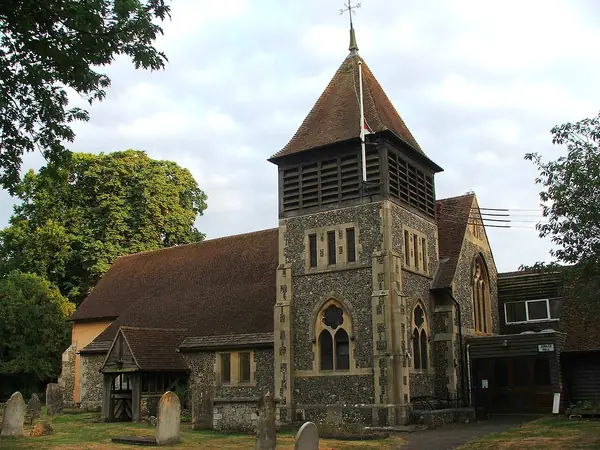
St Mary Magdalene's Church
Grade II* listed parish church dating from 1343, set in its churchyard in the older part of Longfield. A timber-clad belfry sits on top of the tower.
Learn more about St Mary Magdalene's Church on Google MapsRe-roofing in Longfield is worth getting right first time, because a village roof takes a lot of weather. The open ground around Longfield lets wind build up before it reaches your gable, and inland frosts work at older tiles every winter. When a roof gets to the point where the felt has perished, the battens are soft and every repair turns into a bigger one, a full re-roof is the sensible answer. We strip the old covering, fix any timber that needs it, upgrade the insulation as the regulations expect, then fit new membrane, battens, tiles or slates, ridge and lead. First, though, you get a free survey, a written quote with building control spelled out, and a straight view on whether you need a new roof at all.
A roofer rings you back to arrange a visit.
A new roof is a big spend. Here's what you should expect for the money, and what we put in.
01
Your new roof is set out with fixings matched to the wind exposure of the site. On houses facing fields we give the verges, eaves and ridge extra attention, since those are the edges a gale gets hold of.
02
Re-covering a roof counts as work to a thermal element, so the insulation should be brought up to date. We include it in the quote. It cuts heat loss and keeps the job on the right side of building control.
03
Re-covering more than half the roof, changing the material or adding a heavier covering all bring building control in. We tell you which applies to your house and handle the notification as part of the job.
04
We'll talk you through tile and slate options for your roof's pitch, weight and look. On an older village house and a newer New Barn home, the right answer is often quite different. We'll bring samples if it helps.
05
With the scaffold up, it's the cheapest moment you'll get to repoint a stack, renew its flashings or replace tired lead valleys. We price those alongside the re-roof so you can decide.
06
The finished roof comes with a written 10 year guarantee. File it with the deeds. A buyer's solicitor may well ask for it, and it's useful to have if you ever need us back.
1,000+
Roofs repaired, renewed and rebuilt
10 yrs
Written guarantee on every re-roof
5★
The only rating anyone has left us
£0
For the survey and the written quote
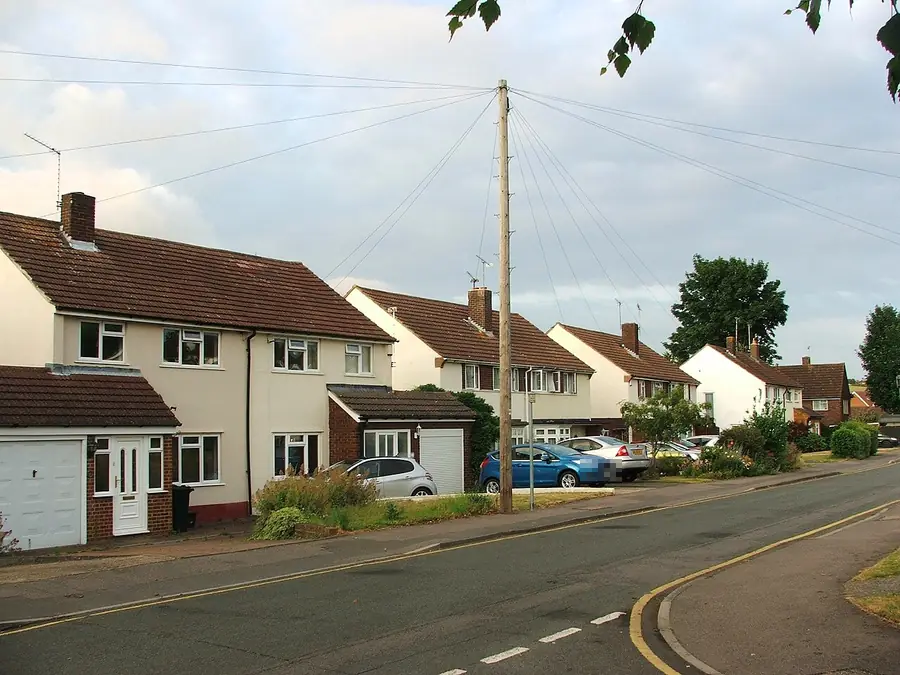
Longfield was growing long before it joined Dartford in 1987. Dartford Rural District Council bought land at Hoselands Hill for council houses in 1930, the old village along Main Road goes back further still, and New Barn's streets are newer. Each era has its own problems by the time a re-roof comes round. Older roofs may have no felt at all, just tiles on battens with mortar torching underneath. Mid-century roofs often have early bitumen felt that has turned brittle. Both end up needing the same full treatment. Newer roofs in New Barn are usually still a long way from this point, and a repair is normally what they need.
The converted oasts on Station Road are a different proposition. Re-roofing one means scaffolding built around a steep, unusual shape and, if the building is listed, materials agreed with Dartford Borough Council before anything is ordered. We price those individually after a careful survey, and we'll tell you plainly if the job needs a specialist instead.
For an ordinary house with a handful of problems, a full re-roof can be more than you need, so it's worth reading about roof repairs in Longfield first.
"Most Longfield owners who ring us about a new roof have already paid for two or three repairs along the same weak edge of it."
We look at the covering, the verges and the ridge from outside, then check rafters, felt and insulation from the loft. If a repair would buy you several more years, we'll tell you so.
Every item is listed: strip and disposal, timber allowance, insulation, membrane, battens, covering, ridge, lead and scaffold. That makes it easy to line ours up against anybody else's. If another quote is much cheaper, check what it leaves out.
We confirm whether building control needs notifying and, for a listed building, whether consent is needed from Dartford. A like-for-like re-roof won't need planning permission in most cases.
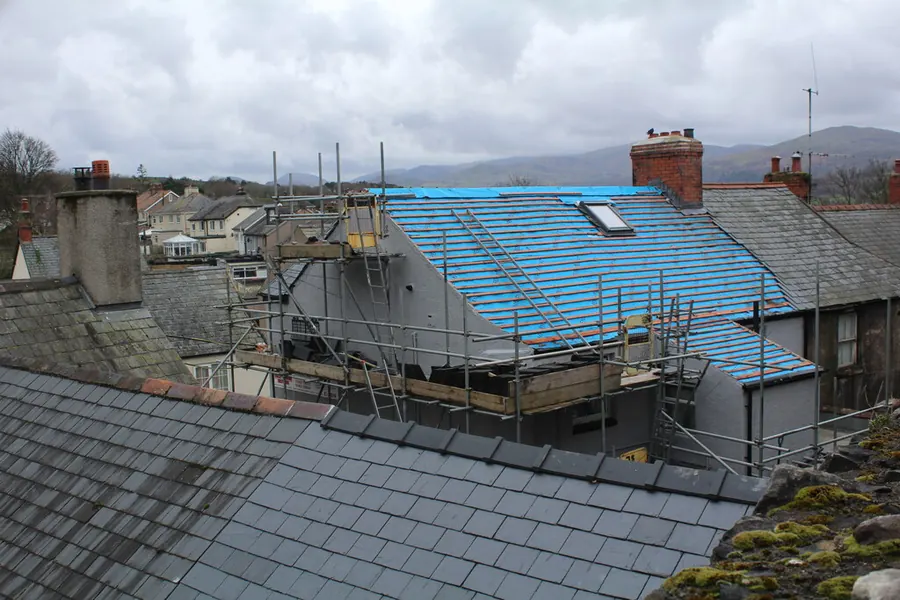
Scaffold goes up with protection at the eaves. We strip in manageable sections and sheet the roof at the end of each day, so the house stays dry while it's open.
With the roof bare, we inspect every rafter and the wall plate. Anything rotten or split is shown to you, priced from the agreed allowance, and replaced before the new layers go on.
Insulation, breathable membrane and treated battens, then the covering, fixed to suit the exposure. Ridges and verges are mechanically fixed, and new lead is dressed at the stack and abutments.
With the scaffold still up, we go through the roof with you using photos taken at each stage. Then it comes down, the garden is cleared, and the paperwork follows. That includes the building control certificate where one is needed.
10
Years' cover on a new roof
1,000+
Roofing jobs finished
Paperwork in your hand on the last day. Not posted out "in due course".
Re-roof a house in Longfield with us and you get 10 years of cover on the workmanship. It's a written document. It has your address on it, lists what was done, and is dated the day the roof is signed off. If water gets in because something was fitted wrong - a batten, a fixing, a lap, a flashing - a roofer comes back and puts it right. You don't pay for that.
Why are we happy to promise ten years? Because of how the roof goes on. Every tile or slate is mechanically fixed to BS 5534, the current British Standard. Ridges and hips are fixed too, not just sat in mortar. A breathable membrane goes down first. Where a roof meets a wall, a chimney or the house next door, it gets proper lead or a tested dry system. Shortcuts there are what make a guarantee expensive, so we don't take them.
Tiles, slates and membranes also carry the maker's own warranty. Those vary by product, and your paperwork tells you which ones apply. If a job is too unusual to guarantee in the normal way, you'll hear that at quote stage.
The right covering depends on the age and style of your house, the pitch of the roof and what weight it can carry. The table compares the main choices we fit around Longfield and New Barn.
| Comparison point | Concrete interlocking tile | Clay plain tile | Natural slate | Fibre cement slate |
|---|---|---|---|---|
| Typical lifespan | 50 years or more | 60 to 100 years | 80 to 100+ years, depending on source | Around 30 years |
| Weight | Heavy | Heaviest, as each tile is double-lapped | Light | Lightest of the four |
| Relative cost | Lowest | Mid to high, slow to lay | Mid to high, Welsh slate dearest | Low to mid |
| Look | Chunky profile, common on postwar homes | Small, warm-coloured, traditional Kent look | Thin, dark and neat | Uniform slate look, flatter colour |
| Planning and conservation | Fine for most homes, can jar in a conservation area | Often expected on older Kent buildings | The like-for-like choice for slate roofs | May be refused on listed or conservation roofs |
| Best for | Budget re-roofs on postwar and newer houses | Period homes and steeper pitches | Victorian terraces, slate-to-slate jobs | Lighter swap where rafters are marginal |
Prices depend mostly on the size and shape of the house. As a guide, a semi runs about £10,500 to £16,000 and a detached house £14,000 to £24,000 or more.
A simple gabled roof is quicker to re-cover than a hipped one. Every hip, valley and dormer adds cutting, lead and time. Larger detached houses can go past the top of our usual range, and we'll explain why line by line in the quote.
Houses facing open ground need more fixings at the edges and sometimes a heavier-duty ridge and verge system. It adds a little to the cost, and a lot to the roof's chances of staying on in a gale.
Concrete tiles are the most economical. Clay plain tiles and natural slate cost more to buy and take longer to lay. A change of material can also bring in building control approval and a check on the rafters.
Converted oasts on Station Road, and roofs with very steep pitches, take longer to scaffold and to cover. These are priced individually after a survey, not from a standard range, because no two are alike.
Usually not, if the new roof matches the look of the old one. Dartford Borough Council is the planning authority for Longfield and New Barn, having taken over from Sevenoaks in 1987. Materially changing the appearance, or working on a listed building, can need permission or consent. Building regulations are a separate matter, and most full re-roofs need building control involved, which we'll arrange.
Yes, if it's fixed properly. Many older roofs rely on gravity and mortar to hold tiles, ridges and verges in place. A new roof can have mechanical fixings throughout, dry ridge and dry verge systems, and a membrane rated for wind uplift. On a house exposed to open fields, that's the main practical gain of re-roofing besides keeping the rain out.
For a typical semi, plan on around one to two weeks from scaffold up to scaffold down. A detached house, a hipped roof or a long wet spell can stretch that. You can stay in the house throughout, since the roof is sheeted every evening, and we'll keep you posted if the weather moves the dates.
You should, and building regulations generally expect it. Re-covering a roof counts as work to a thermal element, so the insulation should be upgraded to current standards where that's practical. With the roof open, insulation can go in at rafter level if you want a warm loft, or we can top up between the joists. Which suits depends on whether you use the loft for storage, or plan to convert it one day.
No. The stack usually stays, but a re-roof is the best moment to look after it. With scaffold already up, repointing, a new flashing or new pots cost far less than doing them later as a separate job. If the stack is no longer used, taking it down below roof level is another option, though that needs care on a shared or listed house. Removing an unused stack also gets rid of one of the commonest sources of leaks on an older roof.
Grade II* listed parish church dating from 1343, set in its churchyard in the older part of Longfield. A timber-clad belfry sits on top of the tower.
Learn more about St Mary Magdalene's Church on Google Maps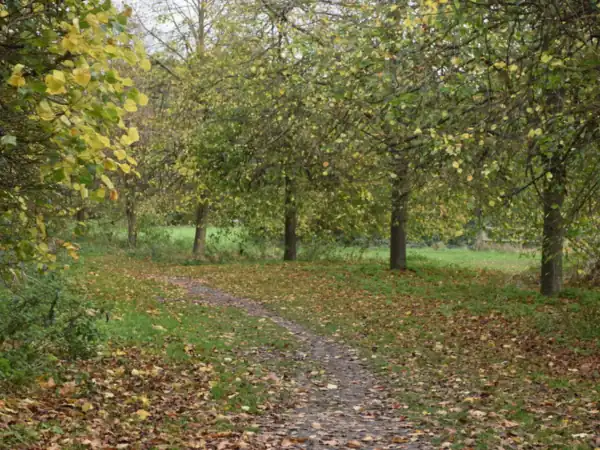
Forty acres of 18th-century parkland near Meopham, about three miles east of Longfield, once the grounds of Camer House. The council bought it in 1967 and opened it to the public in 1971.
Learn more about Camer Country Park on Google Maps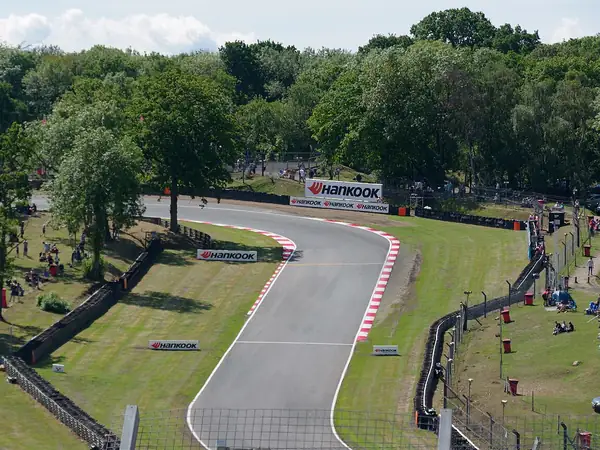
Motor racing circuit at West Kingsdown, around six miles south-west of Longfield. It hosted the British Grand Prix twelve times between 1964 and 1986, and the 2012 Paralympic road cycling events.
Learn more about Brands Hatch on Google MapsEvery review left for us so far has been five stars. We're adding them here as they come in.
Reviews only tell you so much anyway. When a roofer comes out to Longfield, ask to see photos of a recent job on a house like yours. A good roofer will have plenty and won't mind you asking.
Ring 01322 946667 or use the form to book a free survey. We'll check whether you need a new roof at all, and if you do, put the full price in writing.